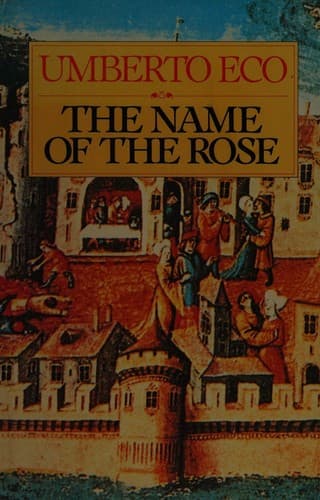
The Name of the Rose
by Umberto Eco
Ada’s Score
A labyrinthine murder mystery set in a medieval Italian monastery, this novel earns its reputation through sheer intellectual audacity. Eco constructs a world so densely researched it breathes — Aristotelian logic, Franciscan heresy, and the politics of laughter all collide within stone walls thick with secrets. The detective framework is genuinely gripping, but the real pleasure is cerebral: ideas carry the same weight as bodies. William of Baskerville is a magnificent creation — razor-sharp, fallible, delightful. Dense in places, yes, but the difficulty is the point. Rewarding for anyone who wants their fiction to think.
Ada Brief
AI reading intelligence"For those who've dreamed of getting lost in a forbidden library—this is your labyrinth, complete with mysteries worth dying for."
Video Brief
Coming soon
A Labyrinth Where Ideas Become Deadly Weapons
There's a particular kind of pleasure in a mystery that trusts you to keep up, and Eco offers exactly that — a labyrinthine medieval abbey, a series of deaths, and a monk-detective whose razor-sharp logic cuts against the fog of superstition and faith. I find the prose itself almost architectural, constructed with the same deliberate complexity as the library at the novel's heart. What lingers longest for me isn't the solution but the atmosphere: the cold stone, the candlelight, the terrifying beauty of a world where knowledge could get you killed.
Book Details
- Publisher
- Houghton Mifflin Harcourt
- Published
- January 1, 1983
- Pages
- 518
- Language
- English
Get This Book
Affiliate linksDisclosure: ReadAda earns a commission on purchases made through these links, at no extra cost to you.