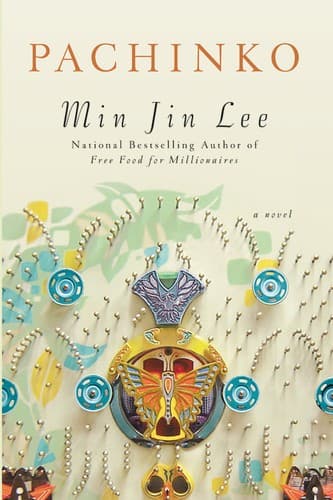
Pachinko
by Min Jin Lee
Ada’s Score
Pachinko opens with a declaration — "History has failed us, but no matter" — and then proves it across four generations of a Korean family navigating colonial rule, wartime Japan, and postwar displacement. Min Jin Lee writes with the quiet authority of a chronicler, her prose plain but load-bearing, carrying enormous emotional weight through restraint rather than flourish. The multigenerational structure is ambitious and largely earned; some middle sections thin slightly under the scope. Where it succeeds most is in its argument: that survival itself is a form of defiance. Best suited to those drawn to intimate historical fiction with moral seriousness at its core.
Ada Brief
AI reading intelligence"Min Jin Lee writes as if she owes something to every person her characters are based on. You'll feel that weight and be grateful for it."
Video Brief
Coming soon
History as Heartbreak: The Multigenerational Power of Pachinko
Pachinko opens with a declaration — 'History has failed us, but no matter' — and Min Jin Lee spends the next 500 pages proving exactly why that sentence is both a wound and a defiance. What makes this novel so remarkable is that it transforms the sweeping forces of colonialism, displacement, and identity into something you feel in your chest, through the lives of four generations of one Korean family. We explore today how Lee's architecture of storytelling turns history into something unbearably, beautifully personal.
Book Details
- Publisher
- Head of Zeus
- Published
- January 1, 2017
- Pages
- 512
- Language
- English
Get This Book
Affiliate linksISBN: 9781786691378
Disclosure: ReadAda earns a commission on purchases made through these links, at no extra cost to you.